

Sound difference
I7-IV7-V7 gives the core blues map, quick-change movement adds early lift, minor blues darkens the tonic, and turnaround chords make the final bars pull back home.
Guitar chord progressions
Learn blues chord progressions with dominant seventh movement, shuffle rhythms, tempo ranges, beginner versions, mistakes to avoid, and practice exercises.
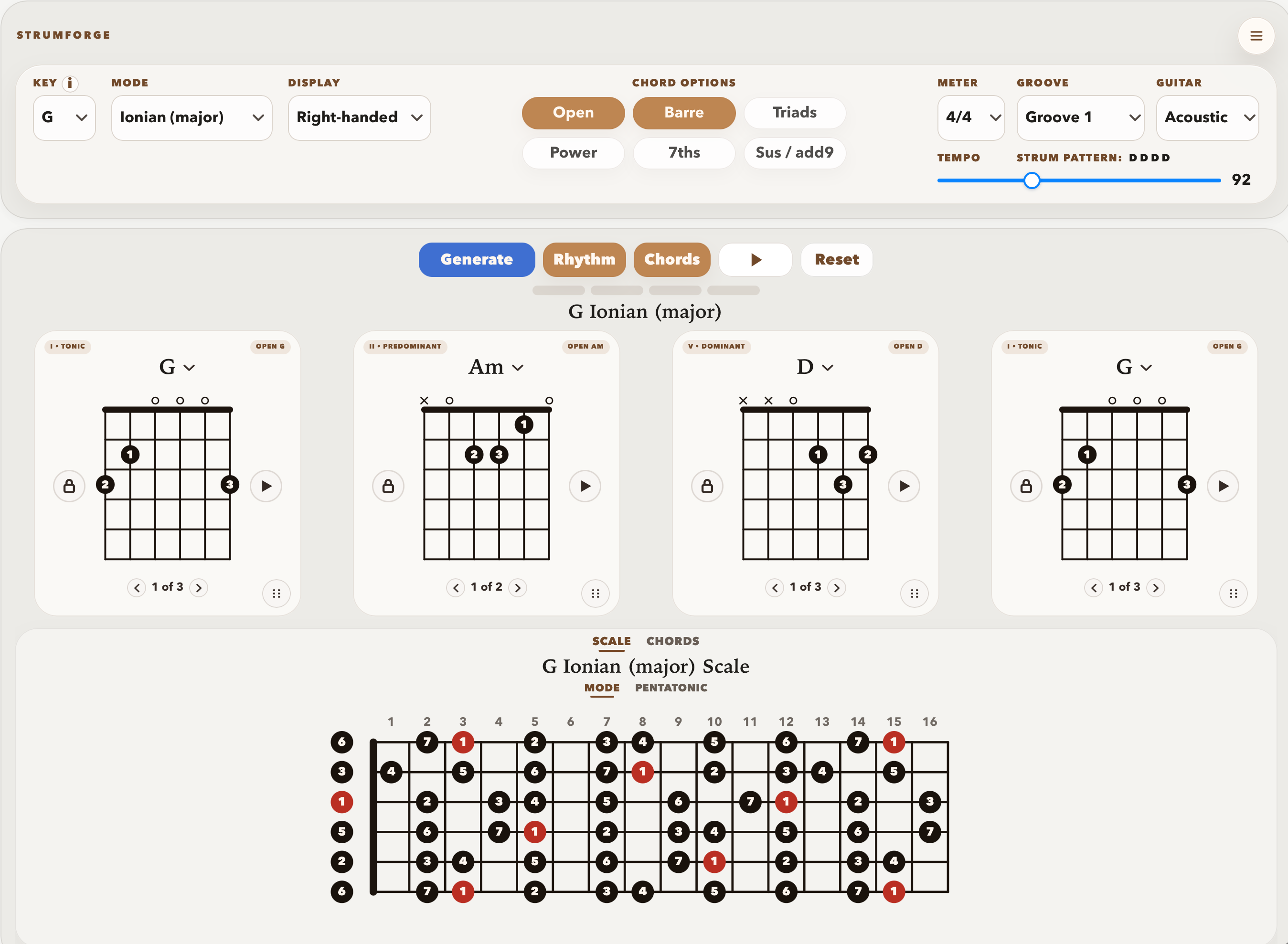
Blues guitar progressions work because dominant color, repeated returns, call-and-response phrasing, and turnaround motion all point back to the groove.
I7-IV7-V7 gives the core blues map, quick-change movement adds early lift, minor blues darkens the tonic, and turnaround chords make the final bars pull back home.
Try a shuffle eighth-note swing, straight eighths for blues-rock, bass-note chord stabs, slow 12/8 triplets, or a stop-time hit on beat one.
Beginner version: 60-90 bpm with A7-D7-E7. Intermediate version: 85-130 bpm with movable dominant shapes, a quick IV, and a one-bar turnaround lick.
Do not play blues eighth notes too mechanically when the groove wants swing. Count the triplet subdivision before speeding up.
Load a dominant loop, keep the rhythm steady, then target the third and flat seventh of each chord with a short lead answer.
| When you need... | What to do on guitar |
|---|---|
| To get the idea under your hands | Play one blues guitar progressions example slowly with a single voicing family before changing anything else. |
| To make the part cleaner | Fix the weakest chord change or rhythm accent first, then return to the full progression. |
| To make it your own | Change one variable at a time: key, capo position, rhythm, register, chord color, or scale focus. |
| To test it in StrumForge | Open a related loop when you want diagrams, groove playback, and timing practice. |
Use these four-chord examples as guitar-friendly starting points. Opening a linked loop in StrumForge counts toward the current 5 free daily progression generations.
Use the page as a starting point, then move into the app when you need sound, timing, diagrams, and scale context.
Short answers for players using this page as a practice or writing reference.
Start with one four-chord loop, slow the tempo down, and keep the same voicing family until the rhythm and chord changes feel automatic.
Yes. Each linked example opens a four-chord progression in the generator and counts toward the current 5 free daily progression generations.
Yes. Once the loop works, change key or capo position so the idea becomes a fretboard exercise instead of a memorized shape.