Triad Trainer
1Root
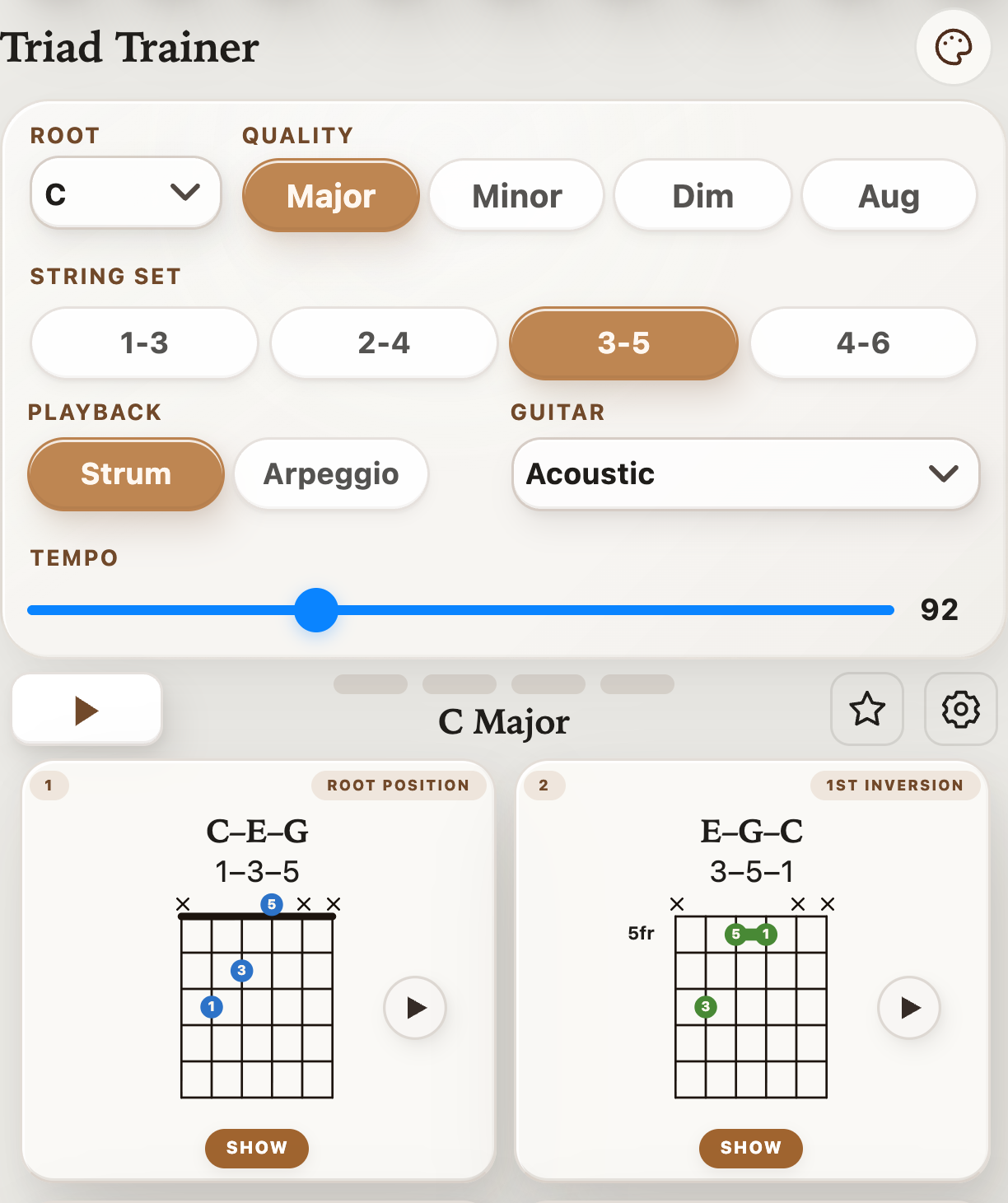
Choose the note the chord is built on. For example, choose C to study a C chord.
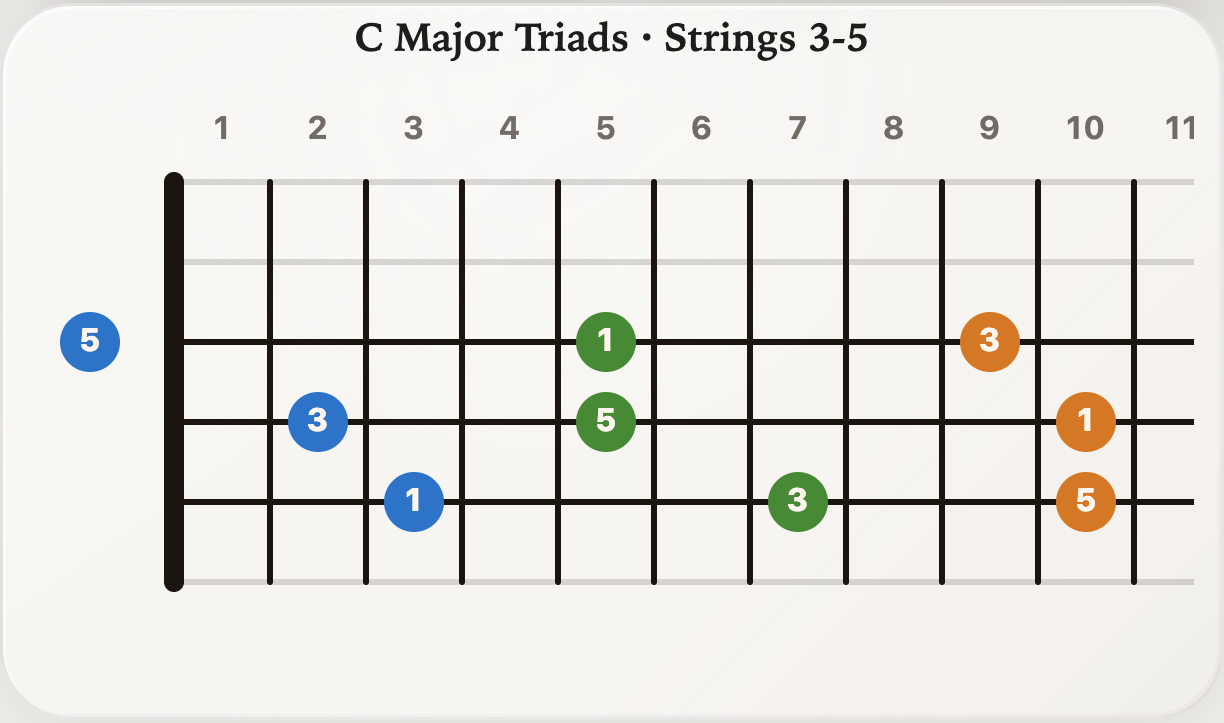
Find the same three-note chord across the neck.
A triad is a chord made from three different notes: a root, a third, and a fifth. The root gives the chord its name. For example, a C major triad contains C, E, and G.
The Triad Trainer shows major, minor, diminished, and augmented shapes on three neighboring strings across the neck. Compare inversions: versions of the same chord with a different chord note at the bottom. Hear each shape strummed or played note by note, then practice moving between them. These smaller shapes help you explore beyond open chords, find smoother chord changes, and connect chords to melodies.
Select a number in an image to see its explanation.
Choose the note the chord is built on. For example, choose C to study a C chord.
Choose the type of triad: major, minor, diminished, or augmented. For example, select Major with a C root to see C major shapes.
Choose which three neighboring strings to play. Try the top three strings first, then compare the same chord on another set.
Choose Strum to hear the three notes together or Arpeggio to hear them one at a time.
Choose the guitar sound used for playback.
Move the slider to set the playback speed in beats per minute.
Press Play to hear the four triad shapes in sequence; press it again to stop.
Tap the star to save the current triad setup in Favorites.
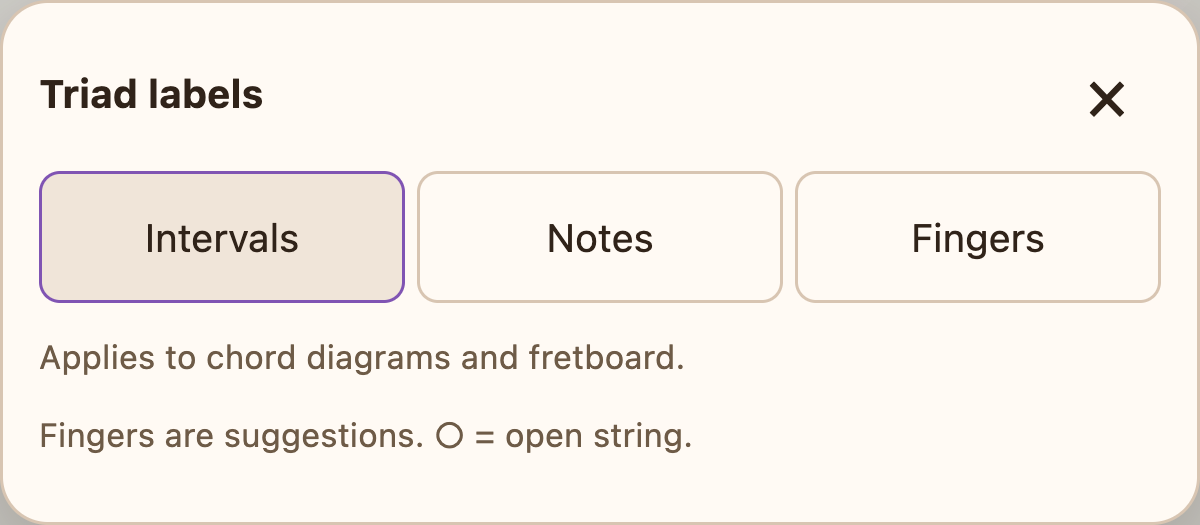
Open the options beside Play to show note names, interval numbers, or suggested fingers on the diagrams.
See triad label settingsTap a triad diagram to view it at a larger size.
Tap the play button next to a diagram to hear that shape on its own.
Tap Show on a card to add or remove that shape from the larger fretboard. Tap a diagram to enlarge it, or its play button to hear it.
Label notes by their role in the chord. For example, 1, 3, and 5 are the notes of a major triad.
Show note names. For example, a C major triad contains C, E, and G.
Show suggested fretting fingers on the diagrams and fretboard. An open circle means play the open string.
This larger diagram shows the shapes whose Show buttons are enabled, so you can compare their positions across the neck.